

Foster

How to Start
Step
1
Apply
Fill out the form above. At the end, you will be prompted to read through and sign the foster handbook.
Step
2
Read the manual
Once approved, you will receive a welcome email that links to at least one manual (or more depending on your foster interests). Please read the manual carefully. Let the foster coordinator know if you have any questions or if you feel like you need any additional resources or guidance in any area.
Step
3
Take an Assessment
Also in your welcome email, you will be asked to take a short quiz that relates to the handbook and manual.
Step
4
Become a Foster!
Once your application is approved and your quiz is complete, you will become an active foster on our contact list. If we have a pet in need that matches your preferences, you will be notified via email.
With the exception of PAWjama Party short-term dog fostering, we do not take requests to foster a specific animal. Our top priority is finding foster homes for animals who are most in need, whether due to medical treatment, behavioral support, stress in the shelter environment, or other special circumstances. When these needs arise, we work thoughtfully to ensure a pet is a good match for their foster.
The Benefits of Fostering
Fostering doesn’t just save lives — it helps our shelter operate more effectively, supports animals in need, and gives you the rewarding experience of making a real difference. Every foster pet you care for brings comfort, love, and a better chance at finding a forever home — while giving you the joy of knowing you played a vital role in their journey.
This is just some of what fostering can do:
Allows for Decompression
Foster homes are a respite away from the stressors of life at the shelter. When animals are relaxed, they’re more likely to connect with potential adopters and find forever homes!
Decreases HSSC’s On-Site Population
With 2,000+ animals entering the shelter every year, it is crucial to create ways to free up space. Foster homes expand our capacity and allow us to provide more quality to care and enrichment to the animals in shelter.
Gives Us Insights About the Pet
When an animal is relaxed in their foster home, we’re able to learn more about their true personality. This helps us find the best possible match for them.
Provides Space for Healing
Animals that are sick or injured can struggle to recover in the stress of the shelter. All medical care is covered by HSSC.








Frequently Asked Foster Questions
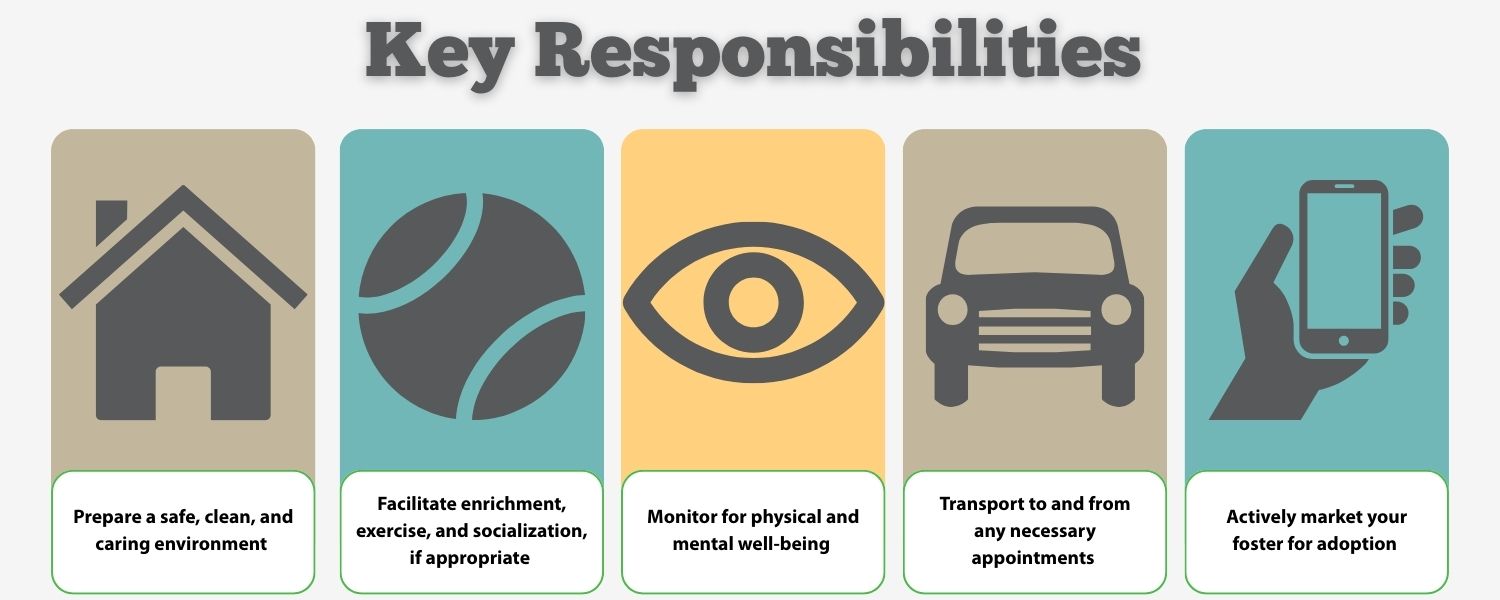
Commitment and responsibilities depend on the individual animal, their situation, and personality. It’s important for foster parents to understand that shelter pets may be stressed, and moving them from the shelter to a foster home can be challenging at first. Foster parents must be patient and committed to providing a stable and consistent environment. Many fosters, such as bottle babies, require feeding every few hours until they are able to eat independently. Specific details regarding the length and expectations of a foster assignment will be discussed with our Foster Coordinator prior to placement.
All basic care supplies are provided, including food, litter, litter boxes, harnesses, leashes, dishes, blankets, toys, wipes, and other items depending on the type of foster pet. If you run out of a provided supply, please contact us, and we will supply what you need. You may provide your own additional items if you wish, but HSSC is not able to reimburse personal purchases.
HSSC assumes responsibility for all necessary expenses related to the animal’s well-being by providing care supplies. Many fosters provide their foster pet with items as a donation, although this is not required. Certain rescue-related expenses are tax deductible; keep all receipts and consult with your tax preparer. All veterinary care is done in-house and those expenses are covered by HSSC.
No, but we do appreciate your help! We will continue to market your foster animal and appreciate the sharing of photos, videos, and other updates. You may also have a chance to be interviewed or photographed to help with our efforts. Many times, a foster parent will find a perfect match on their own through a network of friends, family, and colleagues. The shelter greatly welcomes these referrals! If you think you have found a perfect forever home for your foster, remember they still must go through the application process and be approved by the shelter staff.
Becoming too attached to your foster pet is a common occurrence. The best way to handle this is to not think of the animal as “yours”; you are the animal’s temporary caretaker until their forever family adopts them. The easiest way to keep from getting too attached is to remember that there is another animal waiting for someone like you to save them.
Yes! While sometimes referred to as a “Foster Fail”, we like to call this a Foster WIN. Our foster families often fall in love with their foster pet and choose to adopt. You have first choice with any animal you foster, but please note that once the animal is back at the shelter (for example, after medical care), it is adoptable on a first-come, first-served basis. Let our Foster Coordinator know if you’re interested in adopting.
We prefer that foster parents continue to foster until pets are old enough or medically ready to return. It’s stressful for a pet to be returned to the shelter environment. However, we understand that situations change, and it may become necessary to transfer a foster animal. We request that a foster parent provide as much notice as possible so that we can find an alternative foster home to transfer them. Of course, in an emergency, a foster parent may always bring their animal back to the shelter.
How to return your foster: Send a request-for-transfer email to kaylab@scadopt.org. Include a brief description of the pet, any behavioral or health issues, interactions with other pets, child-friendliness, and any other pertinent information.
If given enough notice, we can usually find volunteers who can foster sit for short durations. We ask that foster parents always keep HSSC staff aware of any temporary foster-sitting situations. All “foster-sitters” need to have an approved foster application on file and have gone through the initial training program.
Most often, the answer to this is yes. Keep in mind that it’s always a health risk to expose your animal to other animals, whether it’s in your veterinarian’s waiting rooms, the pet store, or other common areas. The health risk is minimal if your animals are current on their vaccinations, maintain a healthy diet and lifestyle, and are not elderly or very young. If you have resident pets, it is also helpful to be able to have a separate space for foster pets – a spare room, bathroom, or area for a playpen. Proper hygiene, preventative measures, and an understanding of illnesses and diseases can reduce the chances of your resident pet(s) being at risk.
Yes, it is preferred that the shelter animal(s) have a room or area that is separate from other pets, for a minimum of 14 days after the fosters’ arrival. This allows them time to acclimate to the environment and, more importantly, helps reduce the spread of any diseases that your foster may be harboring. It also represents a safe and comfortable place to call their own and provides them with a sense of security. Cats, especially, may be stressed for the first several days. The space selected should offer a hiding area without allowing them to hide from you. This might be an office, spare bedroom, or bathroom. HSSC cannot provide medical care or reimbursement should a residential pet become injured or ill after an interaction with a foster animal.
No, prior medical experience is not required. However, you may be asked to administer medications to a foster pet, particularly if they are sick, injured, or have special needs. All medications must be given exactly as instructed by the HSSC veterinary team and for the full recommended duration. Do not change dosages or discontinue medications without authorization. If you experience difficulty administering medication as directed, please contact HSSC so an alternative solution can be arranged. Any necessary medical information will be provided to you before accepting a foster assignment.
HSSC devotes significant time, love, and veterinary care to all foster animals and is committed to finding homes for all adoptable pets in our care. Some animals enter foster care due to serious illness or injury. In very rare cases, even after medical treatment, a pet may be too sick, too weak, or exhibit irreparable aggression, and humane euthanasia may be necessary. Fortunately, the vast majority of foster animals heal and recover successfully.
HSSC is a “no-kill” shelter, which means animals are never euthanized due to space or resource limitations. Decisions regarding euthanasia are taken very seriously and involve a team of staff and veterinary professionals who carefully evaluate the whole animal before any action is taken.
For critically ill animals, euthanasia decisions may need to be made immediately to relieve suffering. Reasonable attempts will be made to notify the foster parent beforehand; however, in urgent situations, the foster may be informed afterward. Foster parents are not permitted to be present during euthanasia procedures.
On rare occasions, a foster animal may display dangerous behaviors that were previously unknown or suppressed while in the shelter. HSSC prioritizes the safety of both volunteers and the public. Foster parents must report any aggressive behavior immediately so staff can develop an appropriate behavior plan.
HSSC is committed to transparency about euthanasia practices. Our full euthanasia policy, including procedures related to behavioral euthanasia, is available upon request.
Foster animals remain under HSSC care and should use HSSC veterinary services for medical needs. HSSC does not reimburse veterinary care obtained outside the shelter system.
If the situation can be monitored safely, continue to observe your foster closely and contact the Foster Coordinator if you are unsure how to proceed. In the event of a true emergency, call the Foster Coordinator immediately. They will guide you on the appropriate next steps, regardless of the time of day or day of the week.
Have any recommendations of FAQ we can add here? Or any further questions? Email our Foster Coordinator, Kayla Becker— KaylaB@SCAdopt.org.